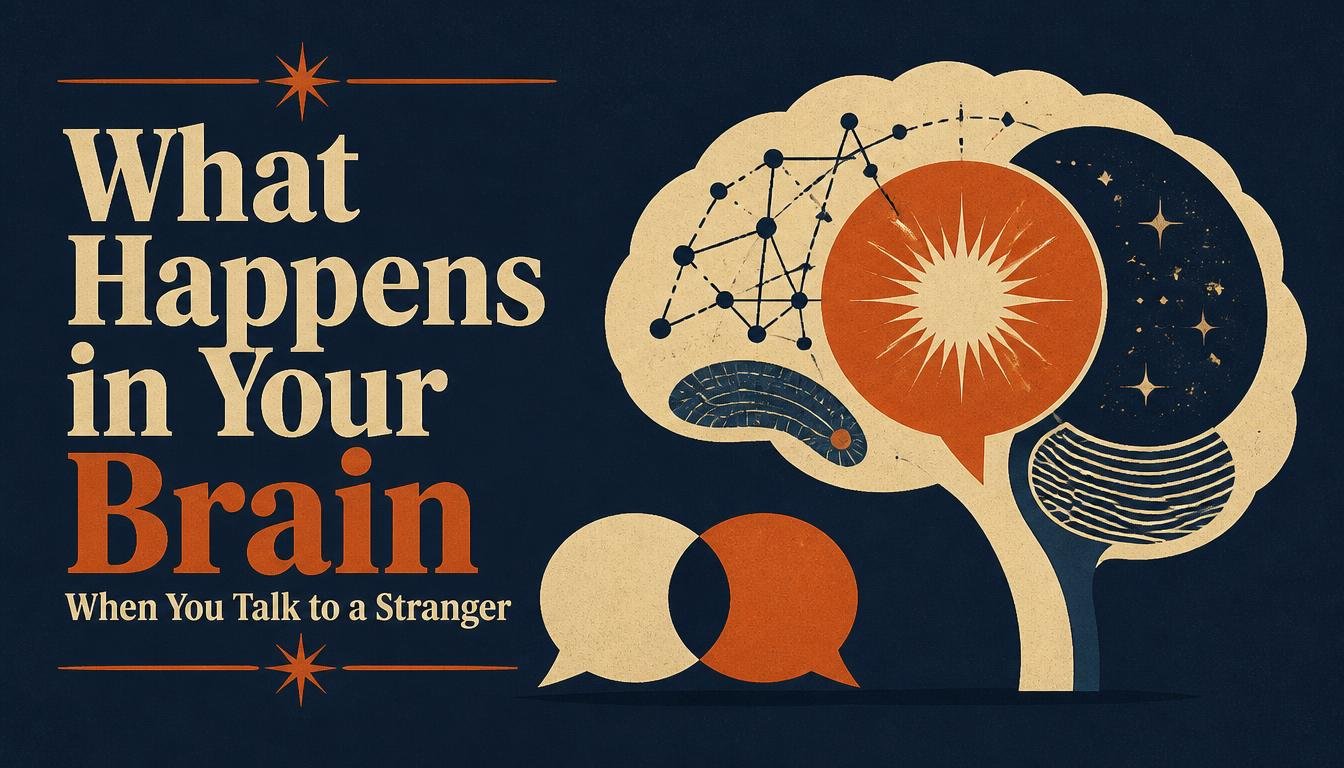
That little flutter in your chest when you're about to speak to someone new? That's not just nerves—that's your brain throwing a full-blown party, complete with fireworks, alarm systems, and a surprising amount of chemistry. I used to think my awkwardness around strangers was just a personality flaw. Turns out, it's neuroscience. And honestly? Knowing that has made every random conversation I've ever had feel a little more magical.
The First Millisecond: Your Brain's Security Guard
The moment you hear a stranger's voice, your amygdala—that tiny almond-shaped part of your brain responsible for emotions and threat detection—kicks into overdrive. It's like a security guard who's had too much coffee. It scans for danger: Is this person friendly? Are they safe? Should I run? This happens in milliseconds, long before you've even formed a conscious thought.
I remember the first time I joined a random voice chat. My palms were sweaty, my voice cracked on "hello," and I felt like I was about to give a speech to a thousand people. That was my amygdala doing its job, keeping me alert. But here's the beautiful part: once you realize that feeling is just your brain caring about you, it becomes less terrifying and more... endearing.
The Dopamine Lottery
Here's where it gets interesting. When a stranger says something kind, or funny, or surprisingly relatable, your brain releases dopamine—the feel-good chemical associated with reward and pleasure. It's the same stuff that lights up when you eat chocolate or get a like on social media. But with strangers, it hits differently. Why? Because it's unpredictable.
Your brain loves patterns. It craves the familiar. But when a stranger says something that resonates—when they laugh at your joke or share a story that mirrors your own—your brain gets a surprise hit of dopamine. It's like winning a mini-lottery. And that's why random conversations can feel so exhilarating. You never know when that hit is coming, but when it does, it's pure magic.
I once had a five-minute chat with someone from a completely different country about our shared love for terrible reality TV. Neither of us expected it. But that unexpected connection? My brain was practically doing backflips.
The Mirror Neuron Magic
Ever notice how you start mirroring the person you're talking to? They lean in, you lean in. They laugh, you laugh. That's your mirror neurons at work. These fascinating little brain cells fire both when you perform an action and when you observe someone else performing it. They're the reason we empathize, why we feel what others feel.
When you're talking to a stranger, your mirror neurons are working overtime, trying to build a bridge between two completely separate worlds. It's exhausting but also beautiful. Your brain is literally trying to become more like theirs so you can understand each other better. That's not just communication—that's connection on a cellular level.
The Cortisol Curve
Let's be honest: talking to strangers can be stressful. Your body releases cortisol, the stress hormone, especially in those first few moments. You might feel your heart race, your voice shake, or your mind go blank. That's cortisol doing its thing.
But here's the secret: cortisol doesn't last. As the conversation progresses and you realize you're safe, your cortisol levels drop, and your brain starts producing oxytocin—the bonding hormone. It's the same chemical released when you hug someone or cuddle a pet. The shift from cortisol to oxytocin is the moment a conversation moves from awkward to comfortable.
I've felt this shift so many times. The first minute is always the hardest. But then you find common ground, the nerves settle, and suddenly you're having a real conversation. That transition is your brain saying, "Okay, we trust this person now."
The Default Mode Network Goes Quiet
Here's something wild: when you're alone, your brain's default mode network—responsible for daydreaming, self-reflection, and worrying about the future—stays active. But when you're engaged in a conversation with a stranger, this network quiets down. You stop thinking about your to-do list, your insecurities, or what you're having for dinner. You become fully present.
That's why talking to strangers can feel so freeing. For those few minutes, your brain stops overthinking and starts experiencing. You're not in your head anymore—you're in the moment. And honestly? That's rare. We spend so much time trapped in our own thoughts that we forget how good it feels to just... be with someone else.
The Memory Maker
Finally, conversations with strangers create stronger, more vivid memories than routine interactions. Your hippocampus—the memory center—pays extra attention to novel experiences. Meeting someone new isn't just a conversation; it's an event. Your brain knows this is special, so it encodes it more deeply.
Think about it: can you remember what you had for lunch three Tuesdays ago? Probably not. But can you remember that random stranger who told you a hilarious story about their cat? Absolutely. Your brain treats these moments like souvenirs worth keeping.
The Aftermath
After a good conversation with a stranger, your brain is buzzing. Dopamine, oxytocin, lowered cortisol—it's a cocktail of feel-good chemicals that leave you lighter, happier, and oddly connected to someone you'll probably never see again. That's not just luck. That's biology.
So the next time you feel nervous about hitting "Connect" on a random voice chat, remember: your brain is doing exactly what it's supposed to. It's protecting you, rewarding you, connecting you, and making memories. It's scared because it cares. And once you push past that first awkward moment? You're not just talking to a stranger—you're giving your brain one of the best workouts it'll ever have.
And honestly? That's worth every sweaty palm and cracked hello.