The Science of First Impressions Through Voice Alone (No Video)
You say "hello" to a stranger on a voice call, and before they've said a single meaningful sentence, you've already started forming an opinion of them. Friendly or guarded. Tired or energetic. Someone worth talking to for twenty minutes, or someone you'll politely wrap up with in thirty seconds. All of that, decided from a few seconds of sound, with no face to look at whatsoever.
It feels almost unfair how fast this happens. But there's real science behind why voice alone is enough to build a surprisingly accurate first impression — sometimes even more accurate than one built on appearance.
The Voice Carries More Information Than People Realize
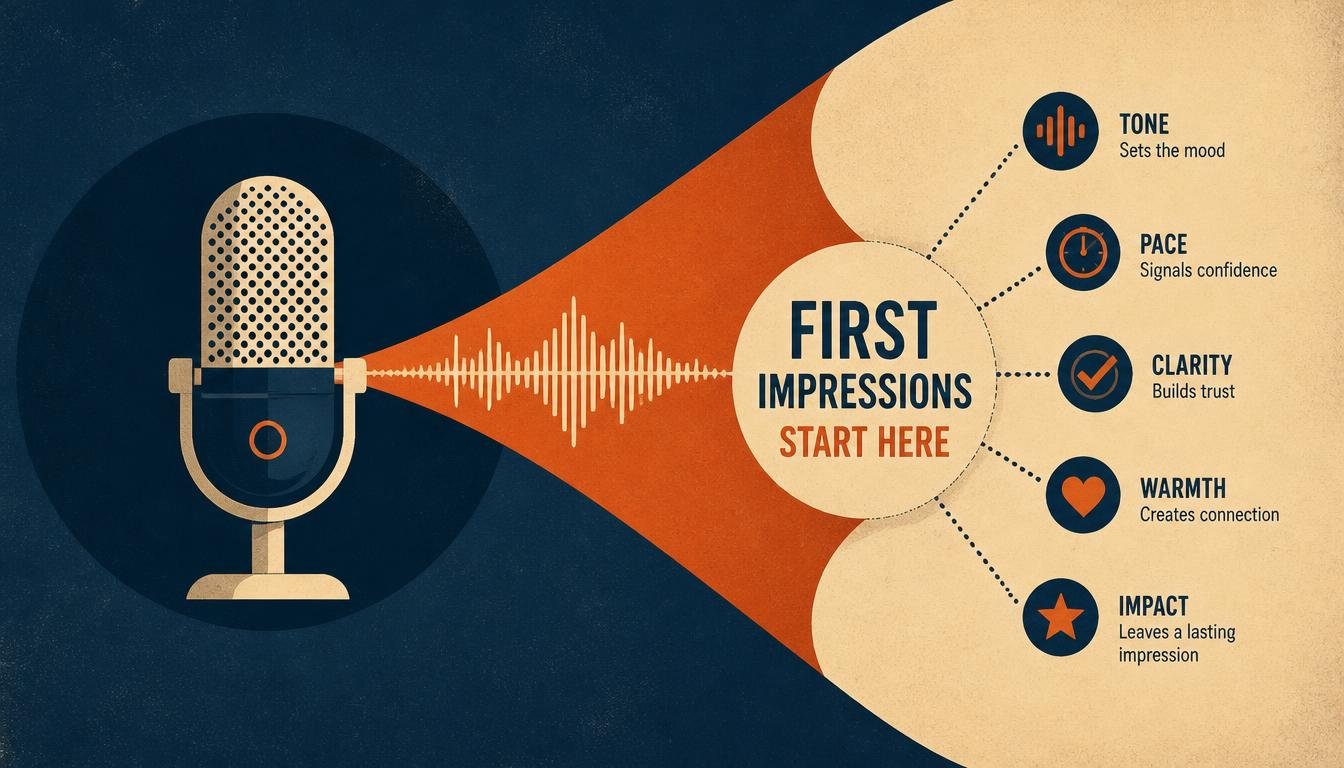
Tone, pitch, pace, and rhythm all pack in far more detail than the words themselves. A flat, slow delivery reads as tired or bored. A quick, slightly breathless tone reads as nervous or excited. None of this requires conscious analysis — human brains are wired to pick up on these vocal cues almost instantly, a skill that predates written language by tens of thousands of years. Long before anyone could see a stranger's face across a crowded space, humans were already using voice to judge safety, mood, and intention.
Voice-Only Impressions Skip the Distraction of Appearance
Face-to-face, a first impression gets tangled up with things that have nothing to do with personality — clothing, facial expressions, background setting, even lighting. All of that visual noise competes for attention and can distort how someone is perceived before they've said a word worth judging them on.
Strip that away, and voice becomes the only variable left. That's part of why people often describe feeling like they "really know" someone from a voice call faster than they expected to — there's simply less clutter getting in the way of the actual signal.
Confidence Is Heard Before It's Seen
In person, confidence often gets read through posture and eye contact. On a voice call, it shows up entirely through pacing and steadiness. Someone who speaks at a relaxed, even pace, without rushing to fill every pause, tends to come across as more self-assured than someone who talks fast and nervously, even if both people are saying equally interesting things. This is one of the more surprising findings from research into vocal communication — listeners consistently rate speakers with steady, moderate-paced speech as more competent and trustworthy, regardless of the actual content.
Warmth Comes Through in Small, Involuntary Sounds
A genuine laugh sounds different from a polite one. A surprised "oh really?" carries a different pitch than a bored one. These small, mostly involuntary vocal reactions are almost impossible to fake convincingly, which makes them one of the most reliable signals of authentic interest during a call. Listeners pick up on this instinctively, even if they couldn't explain exactly what tipped them off.
First Impressions Form Faster Than People Expect
Research into how quickly people form judgments generally points to the same conclusion across different formats: it happens within seconds, not minutes. Voice-only conversation is no exception. By the time someone finishes their first full sentence, a listener has usually already made a rough judgment about their mood, their openness, and whether the conversation is worth continuing — long before either person has shared anything substantial.
Voice-Only Impressions Can Actually Be More Honest
There's a case to be made that voice-only first impressions, while fast, are sometimes less biased than visual ones. Appearance-based judgments are tangled up with all sorts of assumptions people carry about age, style, or background before a single word is spoken. Voice strips a lot of that away. You're reacting to tone, energy, and warmth directly, rather than filtering someone through a visual lens first. It's not a perfect system, but it does remove one entire layer of potential bias from the equation.
Why This Matters for Random Voice Calls
On an app built entirely around voice, this science plays out in real time, every single call. The first ten seconds — how someone says hello, how quickly they respond, whether their tone sounds open or closed off — often determines the entire trajectory of the conversation. Understanding that isn't about performing a fake version of confidence. It's just useful to know that a relaxed pace, a genuine reaction, and a little patience with pauses go a long way toward the impression a stranger forms of you, almost entirely before you've said anything particularly interesting at all.
Turns out you don't need a face to make a strong first impression. You just need a voice that sounds like it means what it's saying.