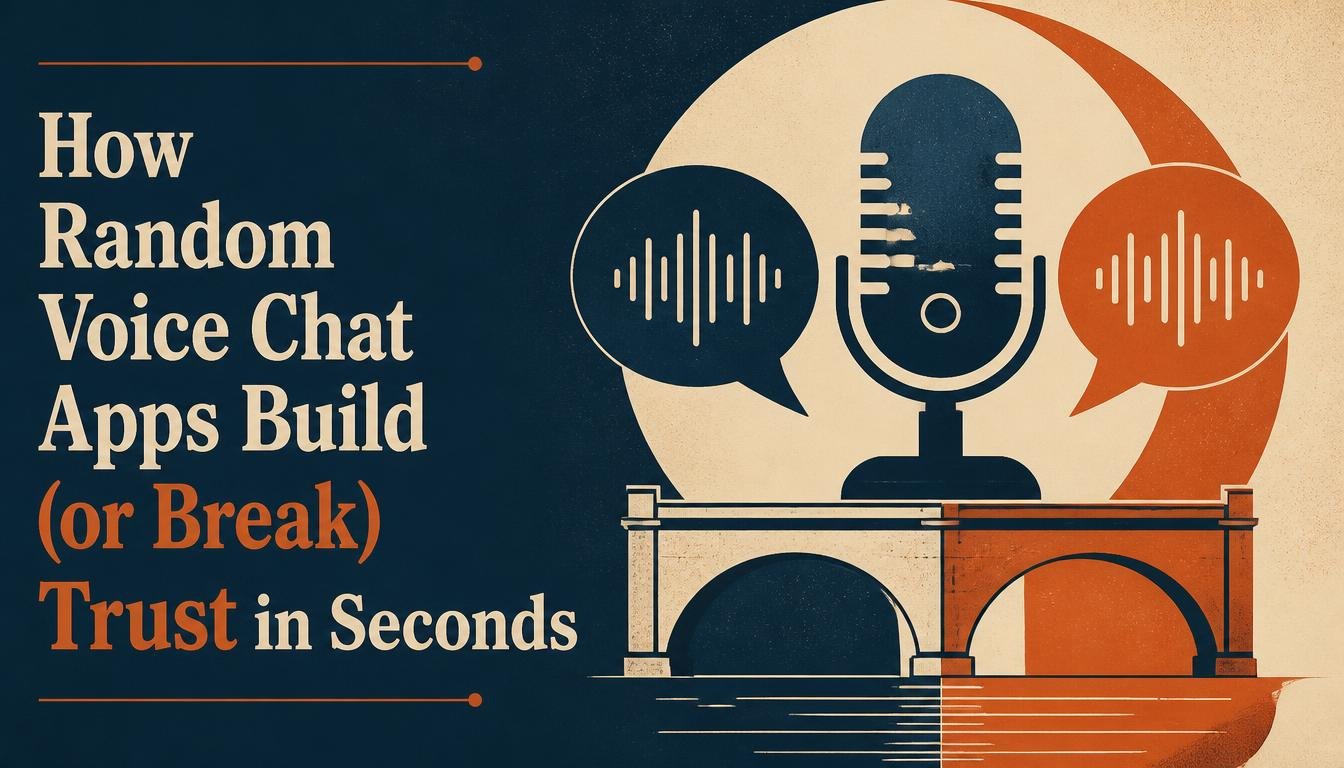
Trust usually feels like something built slowly — over months of friendship, years of family history, repeated proof that someone means what they say. And yet on a random voice call, trust often forms, or completely falls apart, within the first ten seconds. No history, no track record, nothing to base it on except a voice and a handful of words. It shouldn't be enough to build real trust that fast. Somehow, it usually is.
The First "Hello" Sets the Entire Tone
Before any real conversation happens, a single greeting already carries a verdict. A warm, easy hello signals openness. A flat, guarded one signals the opposite, even if neither person means anything by it. Human brains are remarkably fast at reading tone for safety signals, a skill that's older than language itself. That snap judgment, formed in under two seconds, often decides whether the rest of the call gets a fair chance or gets mentally written off before it starts.
Consistency Between Tone and Words Builds Trust Fast
Trust builds quickly when what someone says matches how they say it. If someone says "that's really interesting" in a genuinely curious tone, it lands as sincere. Say the same words flatly, distractedly, and it reads as empty politeness. Listeners pick up on this mismatch almost instantly, even without consciously analyzing it. Calls where tone and words consistently align tend to build trust far faster than ones where something feels slightly off, even if nobody can immediately explain why.
Reciprocity Speeds Everything Up
One of the fastest ways trust forms on these calls is through small moments of reciprocity — one person shares something a little personal, and the other responds with something equally open instead of deflecting. That exchange, even over something minor, signals safety on both sides simultaneously. It's a much faster trust-building shortcut than it would be in real life, where the same level of openness might take several meetings to reach.
One Wrong Move Can Break It Instantly
Just as trust builds fast, it can collapse just as quickly. A comment that feels invasive, a tone that suddenly turns mocking, a question that crosses into territory that feels unsafe — any of these can end a fragile sense of trust in a single sentence. Unlike trust built over years with someone you know, which can usually absorb a single bad moment, trust with a stranger is far more fragile. There's no history to cushion the fall, so one wrong move often ends the conversation entirely.
Predictability Matters More Than Charm
It's tempting to assume the most charming, confident callers build trust fastest, but that's not quite accurate. What actually matters more is predictability — does this person's tone and behavior stay consistent, or does it swing unexpectedly? A steady, even presence, even a quieter one, tends to feel safer than an unpredictable, high-energy one. Consistency reads as trustworthy far more reliably than charisma does.
Anonymity Cuts Both Ways
Anonymity is part of what makes trust build so quickly here — there's no reputation to protect, so people are often more genuinely themselves than they'd be with someone they know. But that same anonymity is exactly why trust breaks so easily too. Without any real stakes tying someone to their behavior, a small red flag carries more weight, because there's no accountability keeping either person honest beyond the conversation itself.
Trust Doesn't Need to Be Permanent to Be Real
It's worth remembering that trust built during a ten-minute call with a stranger doesn't need to last beyond that call to have been genuine while it existed. Plenty of meaningful, honest exchanges happen inside a short window of trust that never needs to extend into an ongoing relationship. That temporary quality doesn't make it less real — it just makes it a different kind of trust than the long-term version people are more used to.
What This Reveals About Trust Itself
Watching trust form and break this quickly, over and over, strips away a lot of the mystery around what trust actually requires. It's not really about time. It's about consistency, tone, and a willingness to be a little open first. On a random voice call, all of that gets compressed into seconds instead of months — which, if anything, makes the mechanics of trust easier to see clearly than they ever are in slower, more familiar relationships.