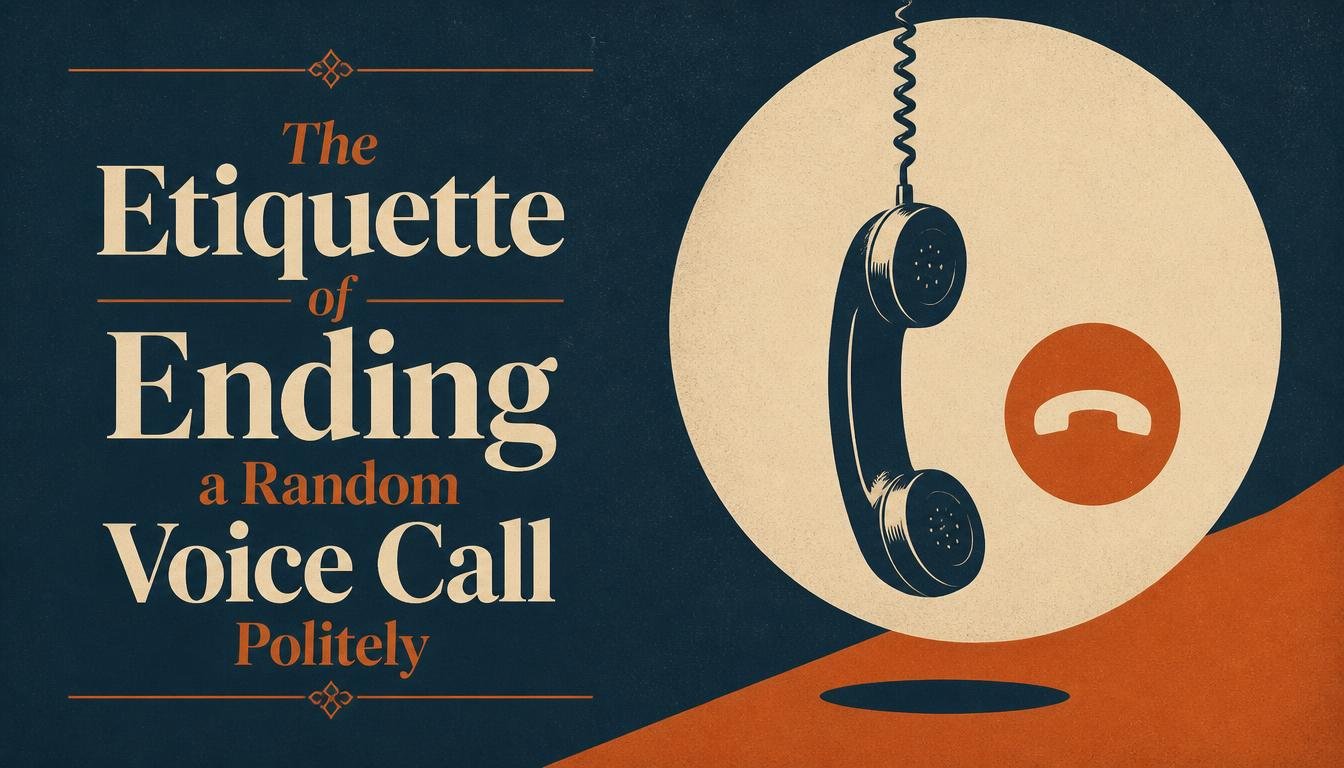
The Etiquette of Ending a Random Voice Call Politely
Starting a conversation with a stranger gets talked about constantly — how to open, what to say, how to break the ice. Almost nobody talks about the other end of it: how to actually leave a conversation without it feeling abrupt, awkward, or accidentally rude. And yet ending a call well matters just as much as starting one, maybe more, because it's the last impression someone walks away with.
You're Allowed to Leave. That's Not the Issue
First, worth saying clearly: nobody owes anyone else unlimited time on these apps. Wanting to end a call isn't rude by itself, no matter the reason — you're tired, you're busy, the conversation just isn't clicking, or you simply don't feel like talking anymore. All of that is completely valid. The etiquette isn't about staying longer than you want to. It's about how you leave, not whether you're allowed to.
The Abrupt Hang-Up Leaves the Wrong Impression
The fastest way to leave someone with a bad taste from an otherwise fine conversation is cutting off without warning, especially mid-sentence. Even if nothing was wrong, an unexplained disappearance tends to read as rejection on the other end, whether that was the intention or not. A conversation that was going perfectly well can suddenly feel like it ended in judgment, simply because there was no signal that it was ending at all.
A Simple Heads-Up Goes a Long Way
You don't need an elaborate excuse to leave gracefully. Something as small as "hey, I've gotta head out, but this was nice" does almost all the work. It signals that the ending isn't about the other person, gives them a clear moment to say goodbye too, and closes the conversation on a note that feels complete rather than cut off. It costs nothing and changes the entire feeling of how the call wraps up.
You Don't Owe a Detailed Explanation
There's a difference between a polite signal and a full justification. You don't need to explain exactly why you're leaving, and you're not obligated to invent a reason if there isn't one you feel like sharing. "I should get going" is a complete sentence. Over-explaining can actually make an ending feel more awkward, not less — a short, warm signal is usually all that's needed.
Reading the Room Matters Too
Sometimes the other person is clearly winding down as well — shorter responses, a slower pace, less energy in general. In those moments, ending the call doesn't need much softening at all, because both people are naturally arriving at the same place. Other times, the other person is clearly still invested and enjoying the conversation. In those cases, a slightly warmer close helps, since the ending might feel more sudden to them than it does to you.
It's Fine to End a Call You're Not Enjoying — Just Don't Ghost Mid-Thought
If a conversation isn't working for you, there's nothing wrong with ending it quickly. The only real etiquette violation is doing it while someone is actively in the middle of saying something, especially something personal. Waiting for a natural pause, even a short one, before wrapping up avoids leaving someone hanging on an unfinished sentence they never got to complete.
Compliments Cost Nothing and Leave a Better Mark
If a conversation was genuinely good, even briefly, saying so before leaving makes a real difference. Something as simple as "that was actually a really fun chat" gives the ending a sense of closure instead of just stopping. It doesn't need to be elaborate. A short, honest acknowledgment that the time was appreciated tends to be remembered far more than the conversation's content itself.
Not Every Goodbye Needs to Be Long
None of this means every ending requires an extended send-off. Some calls are naturally quick and casual, and a short "take care, bye" fits perfectly. The goal isn't to make every ending elaborate — it's just to make sure it feels intentional rather than accidental, so the other person isn't left wondering what happened.
Why This Small Thing Actually Matters
Endings shape memory more than people realize. A conversation that was genuinely enjoyable can leave a slightly sour aftertaste if it ends carelessly, and a mediocre one can leave a surprisingly warm impression if it closes well. On an app built entirely around brief, anonymous connection, the way a call ends is often the only lasting trace it leaves behind. Making that ending kind costs almost nothing — and it's usually the difference between a stranger remembering the conversation fondly or not at all.