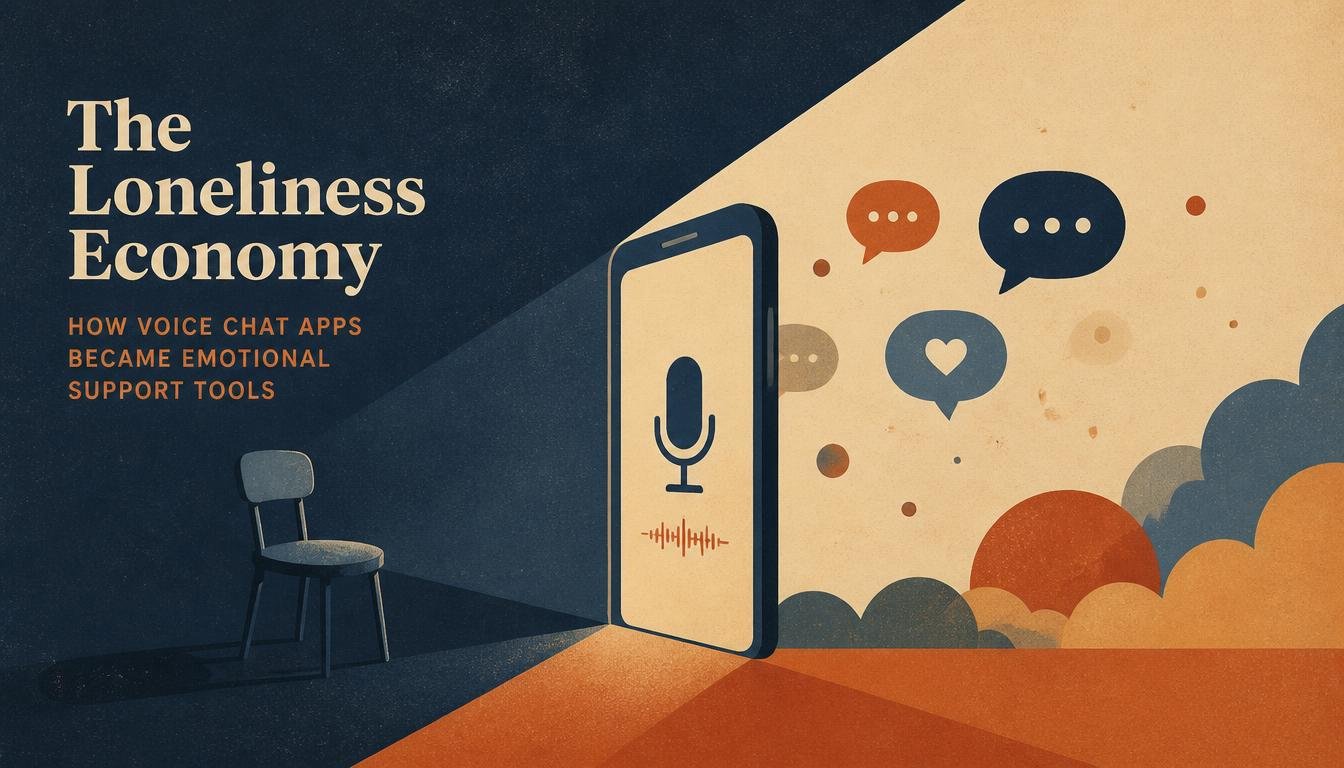
The Loneliness Economy: How Voice Chat Apps Became Emotional Support Tools
A few years ago, if you told someone you talked to strangers online to feel less alone, you'd probably get a worried look. Now it's just... normal. Somewhere along the way, an entire economy quietly built itself around the fact that a huge number of people are lonely, connected to the internet, and looking for something that feels like company without the complications of real relationships.
That's not an exaggeration. It's a pattern researchers and public health officials have been flagging for years — loneliness has been rising steadily across almost every age group, and the tools people use to cope with it have shifted right alongside it.
Loneliness Isn't a Niche Problem Anymore
For a long time, loneliness was talked about like it mostly affected the elderly — people who'd outlived their friends, who lived alone after retirement. That picture is outdated. Surveys over the past several years have consistently shown that young adults report feeling lonely just as often, sometimes more, despite being the most "connected" generation in history. Having hundreds of contacts on your phone and still feeling like there's no one to actually call has become a strangely common experience.
That gap — between being digitally connected and feeling genuinely heard — is exactly where an entire category of apps has found its footing.
Why Voice, Specifically
Text-based support has existed for a long time — forums, messaging apps, anonymous confession pages. But something about voice does a job that text can't. Hearing another human voice, even a stranger's, taps into something more primal than reading words on a screen. Tone carries warmth. A laugh sounds like a laugh. A pause feels different when you can actually hear someone breathing on the other end instead of just watching three dots blink.
This is part of why voice-based platforms have grown so quickly. They're not just another messaging tool — they're offering something closer to the feeling of being on the phone with someone who actually cares, even if that someone is a total stranger you'll never speak to again.
Filling a Gap Therapy and Friendship Don't Always Cover
None of this is meant to replace therapy or real friendships, and most people using these apps know that. But there's a real gap that neither of those things always fills. Therapy usually needs scheduling, money, and a level of formality that doesn't match a 2 a.m. moment of needing to talk to someone right now. Friends are wonderful, but they're not always awake, not always available, and sometimes you genuinely don't want to burden them with something small that just needs to be said out loud.
Random voice calling fills exactly that gap — the in-between moments where you don't need a professional, you don't want to inconvenience someone you know, but you still need a human voice to talk to.
The Business Side of an Emotional Need
It's worth being honest about the "economy" part of this. Loneliness has become something companies actively build products around, and that's not inherently sinister — it's just business responding to a real, documented need. Apps that let you talk to strangers, apps that pair you with paid listeners, apps built entirely around casual conversation — they've all grown because the demand was already there, whether or not anyone built a product for it.
The interesting part is how normal this has become. What used to feel like a last resort — talking to a stranger because you had no one else — has turned into a deliberate, everyday choice for a lot of people, right alongside calling a friend or texting family.
What This Says About Connection Today
Maybe the real story here isn't that people are lonelier than they used to be, though the numbers suggest that's partly true. It's that the definition of "connection" has quietly expanded. A ten-minute call with a stranger who really listens can leave someone feeling less alone in a way that scrolling through a hundred notifications never will.
Voice chat apps didn't invent loneliness, and they won't solve it completely either. But they've become one small, surprisingly effective answer to a very old, very human problem — the simple need to be heard by someone, even if that someone is a voice you'll never hear again.