I still remember my first international voice call. I was matched with someone from Japan, and within seconds, I knew this wasn't going to be like talking to someone from my own country. The pauses were different. The rhythm was different. Even the way they said "hello" felt like it came from a completely different emotional universe. And that's when it hit me—random voice calls aren't just about connecting with strangers. They're about connecting with cultures.
But here's the thing nobody tells you: every country does random voice chat differently. And if you don't know the unspoken rules, you're going to have a very confusing time.
South Asia: The Desi Connection
In countries like India and Pakistan, random voice calls are booming. Apps like Dil Say explicitly offer country-based matching and filters so you can talk to someone local—or go global if you prefer . Platforms have even popped up specifically catering to "Omegle Pakistan" with Urdu voice chats and "Indian Omegle" mixing Hindi and English .
And here's the fascinating part: the conversations feel different. In South Asia, there's often a warmth, a curiosity, a tendency to ask personal questions early. "Where are you from?" "What do you do?" "Are you married?" These aren't considered rude—they're considered normal. It's the desi way of breaking the ice. There's also a whole subculture of prank calls—people using voice changers to sound like aunties or cricket coaches . It's playful, chaotic, and deeply cultural.
The Western Approach: Chill or Transactional?
In contrast, if you match with someone from North America or Europe, the vibe is often more... casual. The "ASL?" (Age, Sex, Location) question is an old internet habit that some still default to, though it's increasingly seen as low-effort .
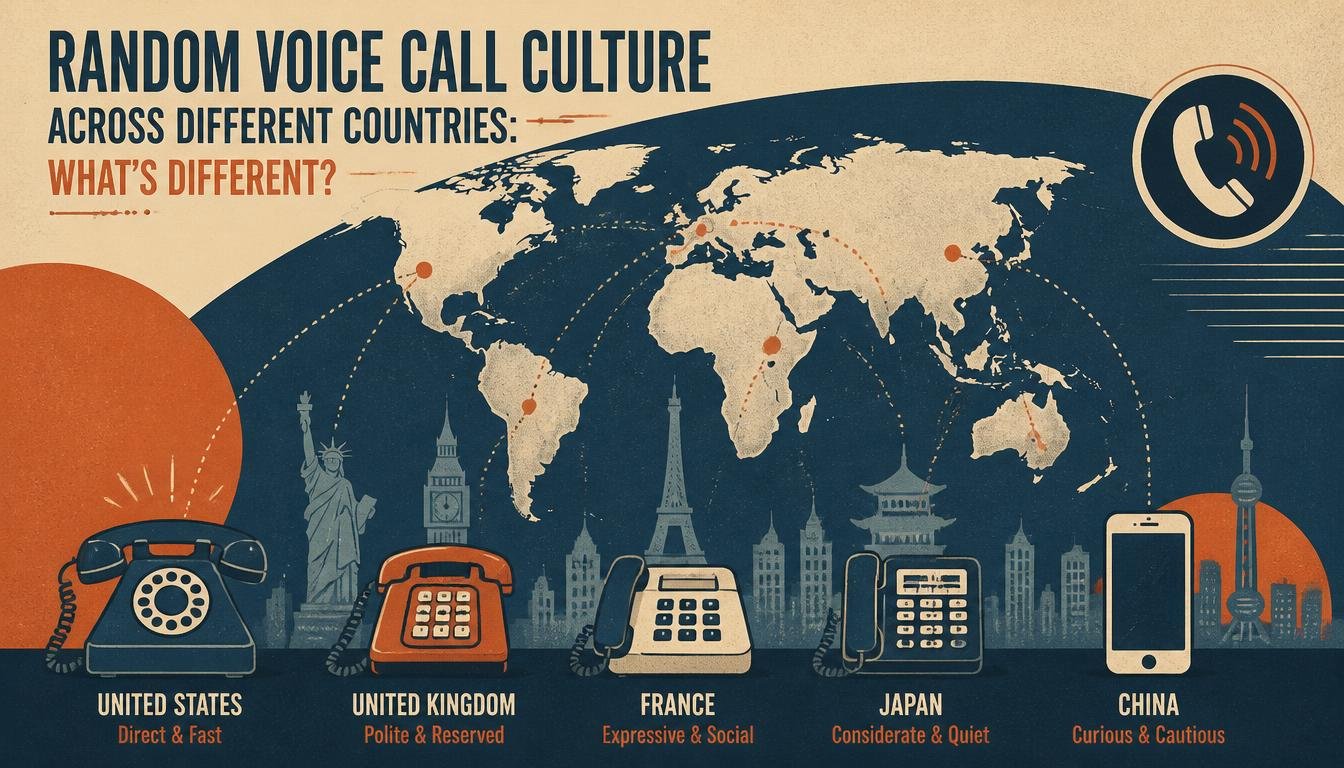
But here's what I've noticed: Western users tend to value efficiency. They're quicker to skip if the vibe doesn't click immediately. Hiding your face or voice? That's a red flag—it signals you might be a bot or a lurker . In South Asia, someone might stay on the call longer out of politeness. In the West, people treat "skip" as a feature, not an insult. If the conversation isn't working, they're gone.
Cultural Nuance: Accents, Silence, and Meaning
Here's where it gets really interesting. Research shows that pragmatic norms—how we format our questions, make requests, and even handle silence—vary significantly across linguacultural groups . Even something as basic as how long a pause should be before it feels awkward? That's cultural.
A study of telephone conversations between Chinese and Pakistani speakers found that cultural differences in speech habits often led to miscommunication and misunderstandings . The way one culture expresses hesitation might be interpreted as confusion by another. The way one culture shows enthusiasm might sound overbearing to someone else.
I've experienced this firsthand. Talking to someone from the UK, their dry sarcasm took me a while to decode. Talking to someone from the Philippines, I noticed they were incredibly warm and careful about preserving "face"—they'd avoid direct disagreement to keep the conversation smooth. And in professional call center studies, researchers found that when conflict arose between Filipino agents and North American customers, it was often mirrored in their prosody—the rhythm and tone of their voices . The tension wasn't just in the words. It was in the music of the speech itself.
The Language Barrier Twist
Let's be honest: a lot of random voice calls happen in English, even when it's nobody's first language. And that creates its own dynamic. Research shows that when things go wrong with voice technology, native speakers tend to blame the device, while non-native speakers blame themselves—their accent, their grammar, their perceived inadequacy .
Apps are catching on, though. Many now offer country-based matching or accent filters so you can find people who speak your language or dialect . Some platforms even have dedicated spaces for language exchange—people who want to practice Spanish with a native speaker from Mexico, or Hindi with someone from Delhi.
The Etiquette That's Universal
Interestingly, some norms seem to cross borders. Whether you're in India or the US, the "first three seconds" rule applies. Opening with just "Hi" puts the pressure on the other person to carry the conversation . People appreciate when you bring energy, show your face, or start with something interesting.
But the biggest lesson? Approach every call with cultural humility. That person from Japan might be quieter not because they're bored, but because their culture values listening. That person from Brazil might be loud and interrupt you—not because they're rude, but because that's how conversation flows there.
What I've Learned
Random voice calls have become my favorite way to travel without leaving my room. I've learned about festivals in countries I can't pronounce properly, discovered that some cultures find direct eye contact intense (when video is involved), and realized that a laugh sounds pretty similar in every language.
The apps are just the infrastructure. The connection is always human. And that connection? It's beautifully, frustratingly, wonderfully different everywhere you go.
That's the whole point, isn't it?