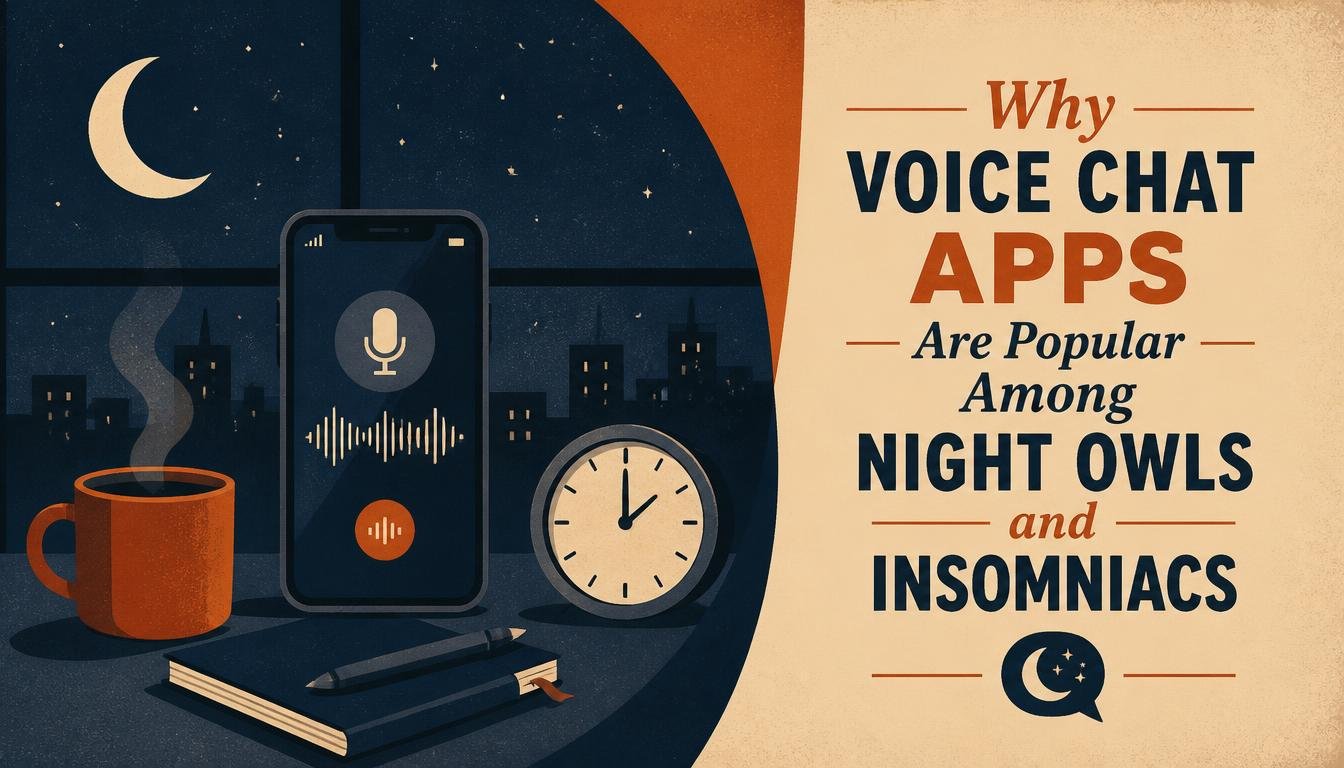
There's a noticeable shift in tone somewhere after 11 p.m. Conversations that would feel formal at noon start to open up — people talk more honestly about what's actually on their mind, less guarded about sounding a certain way. Late-night voice chat has a personality of its own, and it's not just because more people happen to be awake.
Why Late Hours Change How People Talk
During the day, most conversations are wedged between responsibilities — a conversation has to end because a meeting starts, or dinner needs making. Late at night, that pressure disappears. There's often nowhere else to be, which removes the instinct to keep things brief and surface-level, and conversations tend to wander into more genuine territory. Over all the behaviour depends on where you can talking about who is that guy and is this a nice person is over all depend on humanity
Who's Actually Awake at That Hour
- People who can't sleep, looking for something to occupy a restless mind other than scrolling.
- Night-shift workers, whose "evening" happens to fall in the middle of everyone else's night.
- People in a different time zone where it's simply daytime, logging on during their normal hours.
- People processing something, using conversation as a way to think out loud rather than lie awake with it.
The Honesty That Comes With Fewer Distractions
Fatigue lowers the energy required to maintain a polished, guarded version of yourself. Combined with the quiet and lack of anywhere else to be, late-night conversations often skip the small talk faster and land on something real — a genuine worry, an honest opinion, a story someone wouldn't normally bring up mid-afternoon.
A Word of Caution
The same openness that makes late-night conversation feel meaningful can also make it feel more intense than it is in the light of day. It's worth remembering that a 2 a.m. conversation, however honest it felt, doesn't need to be treated as more significant than it is — and it's fine to end a call and go to sleep even mid-thought.
Frequently Asked Questions
Why do conversations feel more personal late at night?
Reduced distractions, fewer time pressures, and lower energy for maintaining a guarded persona all combine to make late-night conversations skip small talk faster than daytime ones typically do.
Is it a good idea to use voice chat instead of trying to sleep?
Occasionally, yes — talking something through can be more useful than lying awake with it. But if sleeplessness is a regular pattern, it's worth addressing the underlying cause rather than relying on conversation as a nightly workaround.
Late-night hours have their own conversational culture — a little more honest, a little less guarded, shaped by tired minds and empty schedules. It's one of the more distinct atmospheres random voice chat has to offer, simply because of what time it is.