How Random Voice Chat Apps Are Changing the Way Gen Z Communicates
Ask most Gen Z users how they feel about phone calls and you'll get the same reaction almost every time — a slight cringe. An unexpected call from someone they know feels like an intrusion. Texting is safer. Voice notes are a compromise. And yet, somehow, this is the same generation fueling the rise of apps built entirely around talking, live, to complete strangers.
That contradiction isn't actually a contradiction once you look closer. It says a lot about how communication itself is shifting.
It's Not About Avoiding Voice — It's About Avoiding Stakes
The common narrative is that younger people just don't like talking on the phone anymore. That's not quite accurate. What they avoid is the pressure that comes with calls from people they know — the expectation to perform, to sound a certain way, to manage an ongoing relationship in real time. A call from a parent, a boss, or even a close friend carries weight. There's history behind it, expectations tied to it.
A call with a stranger has none of that baggage. It's low-stakes by definition. Nobody's judging you against who you were last year. There's no relationship to maintain afterward if the conversation is awkward. That's exactly why voice, which supposedly fell out of favor, is thriving in this specific, consequence-free format.
Texting Culture Created a Craving for Something More
Years of communicating primarily through text has trained an entire generation to be excellent at controlled, edited self-expression — reread before sending, delete and rewrite, choose the perfect emoji. It's efficient, but it's also exhausting in its own quiet way. Every message is a small performance.
Voice strips that performance away. There's no delete button once you've said something. No editing your tone after the fact. For a generation that's spent years curating every text, that unfiltered, unedited quality of a live voice conversation can feel almost like relief — a version of communication where you don't have time to overthink every word.
Anonymity Feels Safer Than a Public Profile
Gen Z grew up with their entire social lives documented — tagged photos, public comment sections, screenshots that never really disappear. Every post is attached to an identity that follows them. Random voice chat flips that completely. No profile, no history, no permanent record attached to your name. You can be completely honest precisely because nothing you say sticks to your actual identity afterward.
That's a meaningful shift from platforms built around visibility and permanence toward something built around the opposite — disappearance and anonymity. It says something about what this generation actually wants from digital spaces: not always more exposure, but sometimes the option to have none at all.
Global Conversations Without the Formality
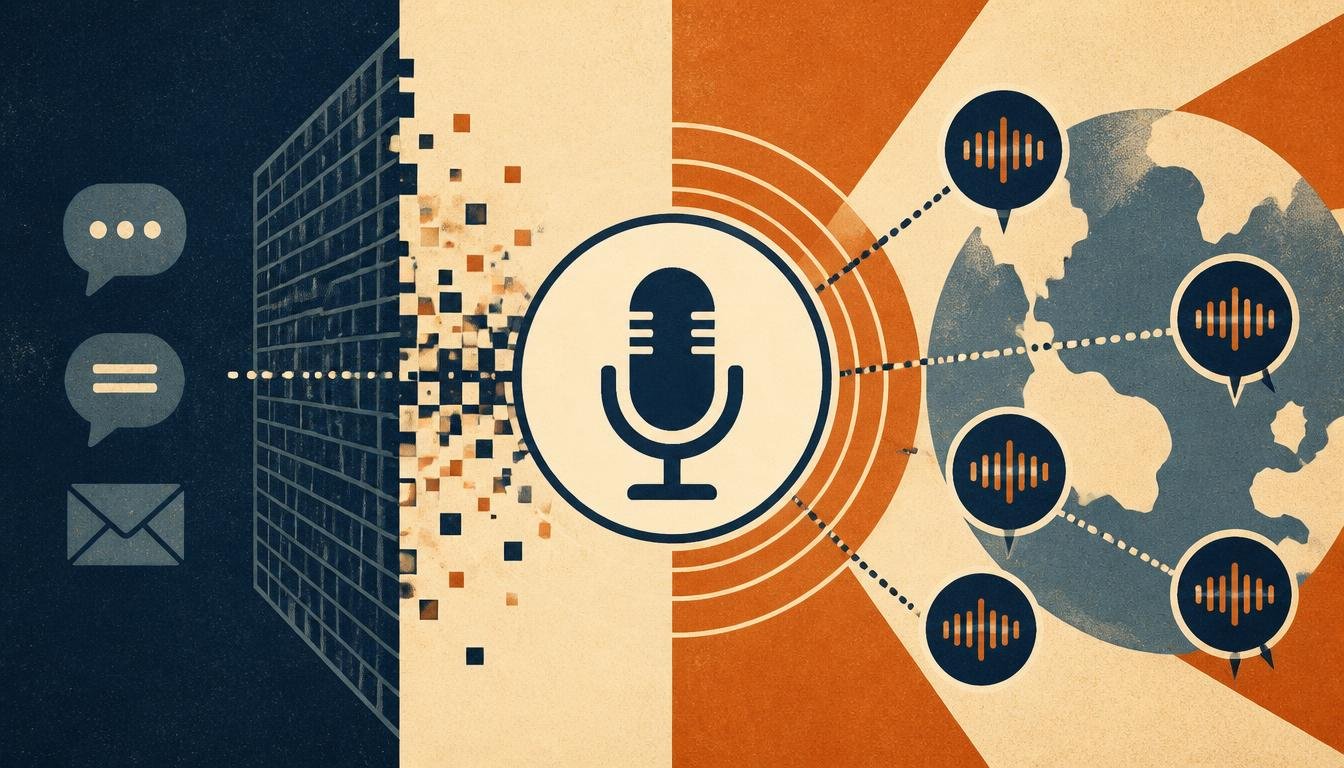
Older generations often needed a reason to talk to someone from another country — a pen pal program, a study abroad connection, a business call. Gen Z, through platforms like these, treats casual conversations with people from other countries as completely normal, something to do out of boredom on a random evening rather than something that requires justification.
This casualness is changing what "meeting new people" even means. It's no longer tied to physical proximity or shared social circles. It's just a tap away, with the same low commitment as scrolling through a feed, except on the other end is an actual person instead of content.
Redefining What Counts as a "Real" Conversation
Maybe the biggest shift is generational attitude toward what makes a conversation meaningful. Older norms tied depth to duration and history — you had to know someone a long time before a conversation "counted." Gen Z, shaped by these apps, seems more comfortable with the idea that a ten-minute conversation with a stranger can be just as real, just as honest, and sometimes just as meaningful as one with someone they've known for years.
What This Says About the Future of Communication
None of this means texting is dying or that phone calls with friends are becoming obsolete. It means communication is fragmenting into more specific purposes than before. Texting handles logistics and light banter. Video calls handle close relationships that need face-to-face presence. And random voice chat has carved out its own lane entirely — a space for honest, anonymous, low-stakes human connection that doesn't fit neatly into any category that existed before it.
Gen Z didn't abandon voice. They just figured out the version of it worth keeping.