The Rise of Voice-First Apps in a Video-Obsessed World
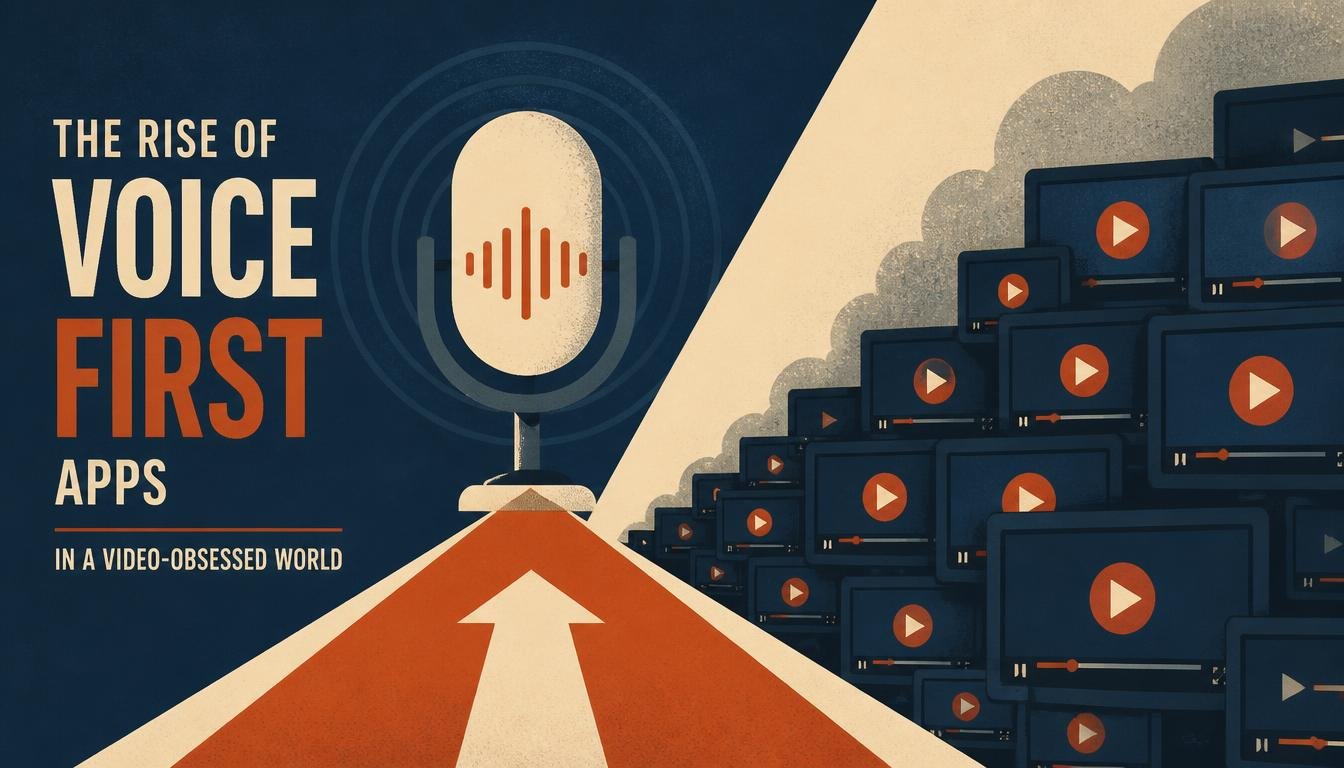
For most of the last decade, the internet has been obsessed with video. Every platform pushed harder toward it — short clips, live streams, endless feeds designed to be watched, not just heard. Being on camera became the default, almost unavoidable if you wanted to participate in anything social online. And yet, quietly, in the middle of all that video obsession, voice-only platforms have been growing right alongside it, not despite the trend but partly because of it.
That timing isn't a coincidence.
Video Fatigue Is Real
Ask anyone who spent the last few years on constant video calls for work, school, or catching up with friends, and you'll hear some version of the same complaint: it's tiring in a way phone calls never were. Staring at a screen, watching yourself in a small corner box, managing your expression the entire time — all of it adds up to a kind of exhaustion that doesn't show up in an audio-only conversation. As video became the default for everything, the appetite for something lighter grew right alongside it.
Voice-first apps stepped directly into that gap. They offer the same real-time, human element of a live conversation, minus the specific kind of tiredness video brings with it.
Being Seen Constantly Has a Cost
Living on camera-first platforms means being visually assessed almost constantly — how you look, what's behind you, whether you seem put-together enough to be on screen. That pressure builds up over time, even for people who don't consciously think about it. Voice-first apps offer a genuine break from that. There's no visual standard to meet, no background to worry about, no need to look a certain way before you're allowed to talk. For a lot of people, that absence of visual judgment feels like relief rather than a downgrade.
Audio Fits Into Life That Video Can't
Video demands a certain kind of attention — you have to stop, sit somewhere presentable, and face a screen. Voice doesn't ask for any of that. It fits into gaps that video simply can't reach: walking somewhere, doing chores, lying in bed with the lights off. As lives get busier and more fragmented, a format that doesn't require full visual attention has an obvious practical advantage. Voice-first apps grew, in part, because they were simply easier to fit into ordinary days.
Anonymity Became More Valuable, Not Less
In a world where nearly everything online is tied to a visible identity — profile photos, tagged videos, public feeds — there's growing value in spaces that offer the opposite. Voice-first platforms let people interact without attaching a face or a permanent record to what they say. As visibility became the norm everywhere else, the option to not be seen started to feel less like a limitation and more like a deliberate choice people were actively seeking out.
Podcasts Already Proved the Appetite Was There
The explosion of podcast listening over the past several years quietly proved something important: people are perfectly happy consuming voice-only content, often preferring it, even when video versions exist. Millions of people choose to listen rather than watch, precisely because voice fits into their day more easily and demands less attention than video does. Voice-first social apps are, in a sense, the interactive cousin of that same shift — proof that the appetite for voice never actually went away, even while video dominated headlines.
Connection Without the Performance
Maybe the clearest explanation for this rise is the simplest one: video-first platforms turned so much of online interaction into performance — curated, filtered, aware of being watched. Voice-first apps offer something that feels more like an actual conversation and less like content being produced for an audience. In a video-saturated world, that difference has become genuinely appealing rather than old-fashioned.
Not a Rejection of Video, Just a Rebalancing
None of this means video is going away, and voice-first apps aren't trying to replace it. Video still has clear value for relationships that benefit from seeing each other, or content built around visuals. But the runaway dominance of video created an opening for something quieter, lower-pressure, and easier to access — and voice-first platforms filled that space almost perfectly.
Sometimes the loudest trend creates the exact conditions for a quieter one to grow underneath it. That's largely what's happening here: in a world that pushed everyone to be seen, a growing number of people are choosing, deliberately, to just be heard instead.