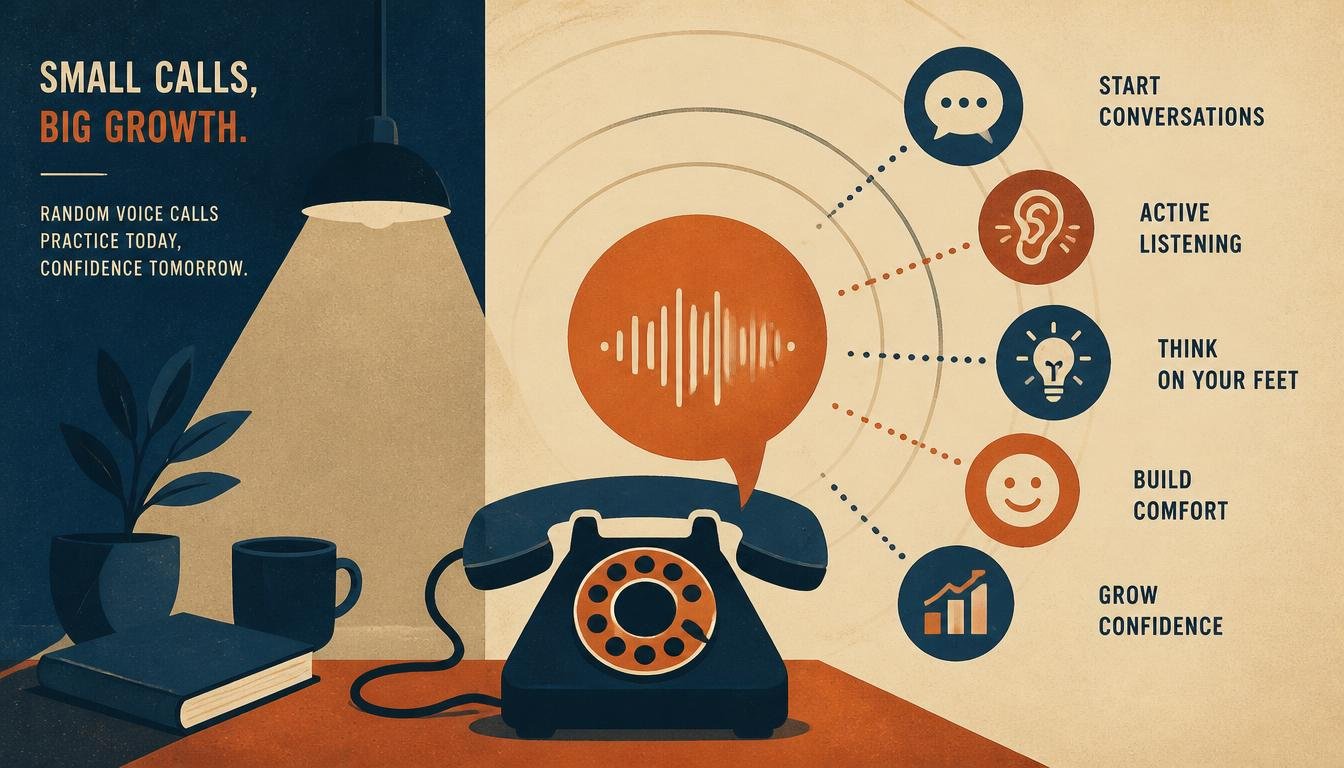
For most of the last decade, growth in online communication meant more visuals — more photos, more video, more editing tools to make both look better. Quietly, alongside all of that, audio-first platforms have been building their own momentum, and by 2026 that momentum is hard to ignore.
What Counts as Audio-First
Audio-first platforms are built around voice as the primary format, rather than treating it as a secondary feature bolted onto text or video. Live voice rooms, voice-only social apps, and random voice chat platforms all fall into this category — the common thread is that the conversation lives in sound, not in a feed of images or a grid of video tiles.
Why the Shift Is Happening Now
- Screen fatigue is real. After years of increasingly visual, high-effort content, audio offers a lower-effort, less performative way to connect.
- Voice carries emotional nuance that text can't, without requiring the production effort a good video does.
- It fits into more of the day. You can talk while walking, cooking, or commuting — activities that make video or focused reading impractical.
- Anonymity is easier to preserve, which lowers the barrier for people who find video-based platforms too exposing.
Where Random Voice Chat Fits Into This
Random voice chat sits at a specific point in this trend: no profile to maintain, no video to perform for, and no feed to curate. It strips social interaction down to the part many people actually want — talking to another person — without the layers of presentation that other formats require.
What This Might Mean Going Forward
As screen fatigue continues to build, it's reasonable to expect more platforms leaning into audio-first design, not as a novelty but as a genuine response to what a growing number of users say they want: connection without constant visual performance. It can be performance of visual constent without connection
Frequently Asked Questions
Is audio-first communication just a temporary trend?
It's difficult to say for certain, but the underlying drivers — screen fatigue and demand for lower-effort connection — appear to be structural rather than a passing fad.
Does audio-first mean video and text are declining?
Not necessarily declining, but audio is carving out a growing share of how people choose to connect, particularly for casual, spontaneous conversation.
Voice was never gone — it just got quieter for a while, overshadowed by more visual formats. In 2026, it's clearly finding its place again, and platforms built entirely around it are a big part of why.